
Guide
Static vs dynamic ADAS calibration: what changes?
Updated August 19, 2026
Short answer
Static calibration checks a windshield camera against measured targets while the vehicle stays in a controlled bay. Dynamic calibration uses a prescribed drive while the system reads the road. Some vehicles require one method and some require both. The manufacturer procedure for the exact year, make, model, and equipment decides.
Static and dynamic calibration compared
- Question
- Where does it happen?
- Static calibration
- The vehicle stays still in a level, controlled work area.
- Dynamic calibration
- The vehicle follows a road route during a service drive.
- Question
- What does the camera use?
- Static calibration
- Vehicle-specific targets placed at measured positions.
- Dynamic calibration
- Road features read during the required drive routine.
- Question
- What can affect the setup?
- Static calibration
- Floor level, target position, vehicle position, lighting, and the exact procedure.
- Dynamic calibration
- Road markings, traffic, speed, weather, and the exact procedure.
- Question
- Who chooses the method?
- Static calibration
- The vehicle maker's current procedure.
- Dynamic calibration
- Same answer: the vehicle maker's current procedure.
| Question | Static calibration | Dynamic calibration |
|---|---|---|
| Where does it happen? | The vehicle stays still in a level, controlled work area. | The vehicle follows a road route during a service drive. |
| What does the camera use? | Vehicle-specific targets placed at measured positions. | Road features read during the required drive routine. |
| What can affect the setup? | Floor level, target position, vehicle position, lighting, and the exact procedure. | Road markings, traffic, speed, weather, and the exact procedure. |
| Who chooses the method? | The vehicle maker's current procedure. | Same answer: the vehicle maker's current procedure. |
What happens during static calibration?
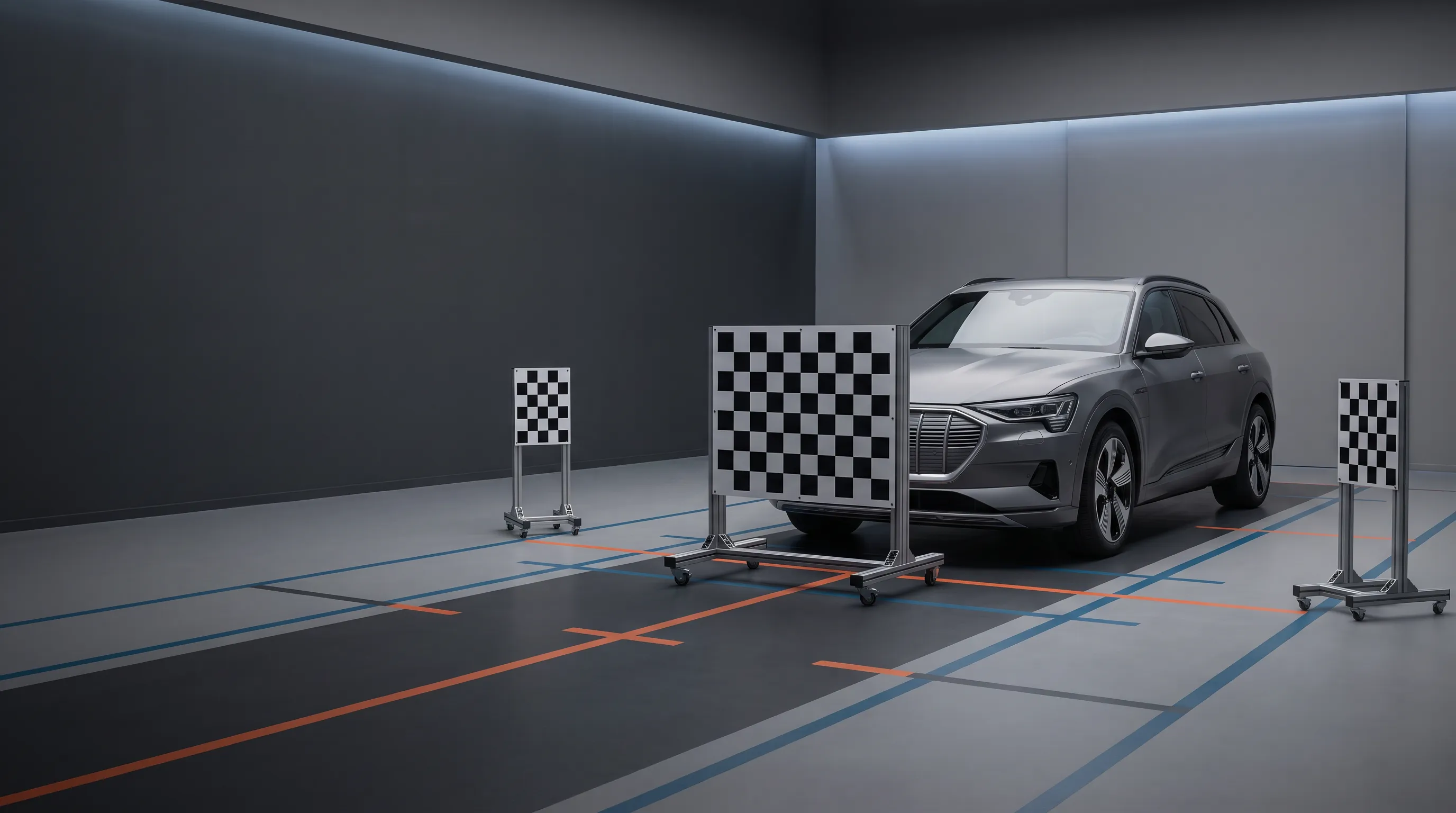
The vehicle remains parked while the technician positions the correct target or calibration board in relation to the vehicle. The diagnostic system then runs the vehicle-specific routine. Precise setup matters: the vehicle, floor, targets, and working space have to meet the procedure instead of merely looking straight. That is why we use our equipment in a level, controlled bay when static calibration is called for.
What happens during dynamic calibration?
Dynamic calibration is a service drive, but it is not an ordinary test drive. The diagnostic system starts the routine, and the vehicle must see the road under the conditions named in its procedure. Suitable lane markings, traffic, weather, speed, and route can affect whether the routine completes. The scan tool or vehicle procedure confirms completion; time on the road alone does not.
Can one vehicle need both methods?
Yes. Bosch documents that some systems use a mix of static and dynamic calibration. The methods may also have to happen in a particular order. We do not assume that every camera uses the same sequence. We identify the vehicle and follow the current procedure before the calibration is treated as complete.
Who decides which method your car needs?
The vehicle maker's procedure decides. Year, make, model, trim, installed options, camera, and repair operation can all change the requirement. I-CAR's calibration search is built from vehicle-specific and OEM-supplied information, and it tells repairers to use the latest vehicle-maker technical information. A camera behind the mirror is a useful clue, not the final method decision.
Why the windshield replacement still matters
A forward camera looks through the windshield, so replacing the glass can trigger camera aiming, initialization, or calibration steps. The replacement and the required calibration belong to one complete job. We check the requirement before work is treated as finished and include required calibration in the quote instead of leaving it as an unexplained add-on.
What should you send for a real answer?
Send the year, make, model, service ZIP, and VIN if it is available. A photo of the camera area behind the rear-view mirror also helps us identify the glass features. We use those details to check the job, explain whether calibration applies, and price the correct glass and required work together.
Questions about this guide
- Can the shop choose static or dynamic calibration?
- No. The current procedure for the exact vehicle decides whether the job uses static calibration, dynamic calibration, or both.
- Is dynamic calibration just a test drive?
- No. It is a prescribed calibration routine started and checked through the vehicle and diagnostic system. A normal drive is not proof that calibration completed.
- Can static calibration be done at my location?
- The setup has to meet the vehicle procedure. Static work commonly needs measured targets, level space, and controlled conditions, so we handle required static calibration in our bay.
- How do I know which method my windshield camera needs?
- Send the year, make, model, and VIN if available. We check the exact vehicle procedure instead of guessing from model year or camera appearance.
Check the calibration for your vehicle
Send the year, make, model, service ZIP, and VIN if available. We will check the glass and required calibration together.