Guide
Which vehicles need ADAS calibration?
Updated August 21, 2026
Short answer
No make, model year, or trim list is reliable by itself. A vehicle needs calibration when its current manufacturer procedure calls for it after the work being done. The strongest windshield clue is a forward-facing camera near the rear-view mirror, often tied to lane departure or lane keeping, forward-collision or automatic braking, adaptive cruise, or lane centering. Send the year, make, model, VIN, and installed features so the exact requirement can be checked.
The equipment matters more than the badge
Two vehicles with the same name and model year can carry different cameras, sensors, and option packages. One may need a camera procedure after windshield work while another may not. That's why a brand list or a cutoff such as 2018 and newer can only be a clue. It can't replace the current procedure for the exact vehicle and repair operation.
Windshield features that call for a closer check
Look near the rear-view mirror for a forward-facing camera housing. Lane departure warning, lane keeping, lane centering, forward-collision warning, automatic emergency braking, and some adaptive cruise systems can use forward cameras or linked sensors. NHTSA notes that lane departure warning and lane centering use camera-based information. The feature name still doesn't reveal the full calibration procedure because manufacturers package and name these systems differently.
Features that do not prove windshield calibration by themselves
A backup camera, blind-spot warning, rain sensor, heated glass, acoustic glass, or head-up display can change the glass or repair details without proving that the windshield camera needs calibration. Some use sensors in other parts of the vehicle. We don't treat a feature name as a shortcut around the vehicle procedure.
The repair operation also changes the answer
The same vehicle can have different requirements after different work. American Honda's aiming guidance, for example, identifies windshield removal or replacement, camera removal or replacement, structural repair, and certain fault codes as separate reasons to check or perform aiming. Other manufacturers define their own triggers. The current procedure for the vehicle and the work performed is the final authority.
What to send for a reliable vehicle check
Send the year, make, model, service ZIP, and VIN if it is available. Include the trim or safety package and a clear photo of the camera area behind the rear-view mirror when you can. We use those details to identify the correct glass, check the current procedure, and include required calibration in the quote instead of adding it as a surprise later.
How VA Auto Glass handles required calibration
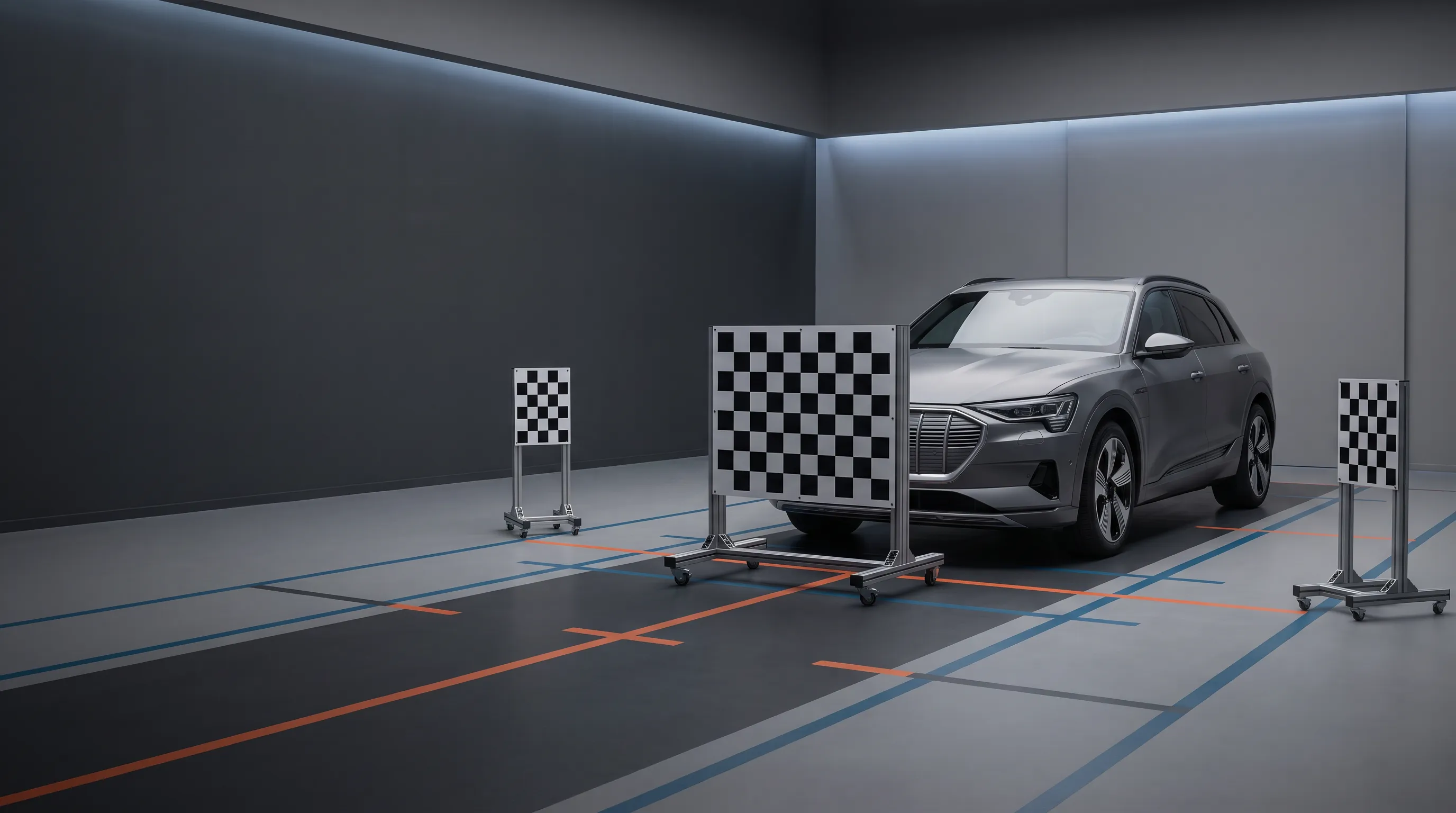
We check the vehicle procedure before the glass job is treated as complete. When calibration is required, we handle it in-house with our equipment. Static work is performed in our level, controlled bay, and the exact procedure decides whether the vehicle needs static calibration, dynamic calibration, or both.
Questions about this guide
- Does every newer vehicle need ADAS calibration?
- No. Model year alone can't answer it. The installed equipment, the work being done, and the current manufacturer procedure for the exact vehicle decide.
- Does a camera behind the mirror mean calibration is required?
- It is a strong clue after windshield work, but the vehicle procedure is the final answer. We check the exact year, make, model, equipment, and repair operation.
- Do blind-spot warning or a backup camera require windshield calibration?
- Not by themselves. Those features can use sensors away from the windshield. They still belong in the vehicle check because linked systems and repair procedures aren't the same on every vehicle.
- What information should I send?
- Send the year, make, model, service ZIP, VIN if available, trim or safety package, and a photo of the camera area behind the rear-view mirror.
Check the calibration requirement for your vehicle
Send the year, make, model, service ZIP, VIN if available, and a photo of the camera area. We will check the glass and required calibration together.