
Guide
Window motor vs regulator vs switch: how symptoms differ
Updated August 30, 2026
Short answer
Symptoms can narrow the fault, but they can't confirm the failed part. Crooked or falling glass points toward the regulator or track. One switch working while another does not points toward the switch or control circuit. A silent window doesn't prove the motor is bad because the fuse, wiring, switch, module, power, or ground can stop it too.
What the symptom points to and what still needs testing
- What happens
- The glass drops, tilts, sits crooked, or will not stay up
- Stronger clue
- Regulator, carrier, guide, or track
- What still needs testing
- Glass attachment, regulator parts, run channel, and alignment
- What happens
- The motor can be heard, but the glass barely moves or binds
- Stronger clue
- Regulator, track, or glass drag
- What still needs testing
- Guides, weatherstrip drag, cable or arm movement, and motor load
- What happens
- One switch works, but another switch for the same window does not
- Stronger clue
- Switch or control circuit
- What still needs testing
- Switch command, wiring, connector, and vehicle control logic
- What happens
- There is no sound and no movement
- Stronger clue
- Electrical fault or motor fault
- What still needs testing
- Lockout, fuse, switch command, module, voltage, ground, and motor response
- What happens
- The window moves slowly, shudders, or stops partway
- Stronger clue
- Binding, alignment, regulator, or motor load
- What still needs testing
- Battery condition, guides, weatherstrip, interference, calibration, and motor current
| What happens | Stronger clue | What still needs testing |
|---|---|---|
| The glass drops, tilts, sits crooked, or will not stay up | Regulator, carrier, guide, or track | Glass attachment, regulator parts, run channel, and alignment |
| The motor can be heard, but the glass barely moves or binds | Regulator, track, or glass drag | Guides, weatherstrip drag, cable or arm movement, and motor load |
| One switch works, but another switch for the same window does not | Switch or control circuit | Switch command, wiring, connector, and vehicle control logic |
| There is no sound and no movement | Electrical fault or motor fault | Lockout, fuse, switch command, module, voltage, ground, and motor response |
| The window moves slowly, shudders, or stops partway | Binding, alignment, regulator, or motor load | Battery condition, guides, weatherstrip, interference, calibration, and motor current |
A dropped or crooked window points first to the mechanism
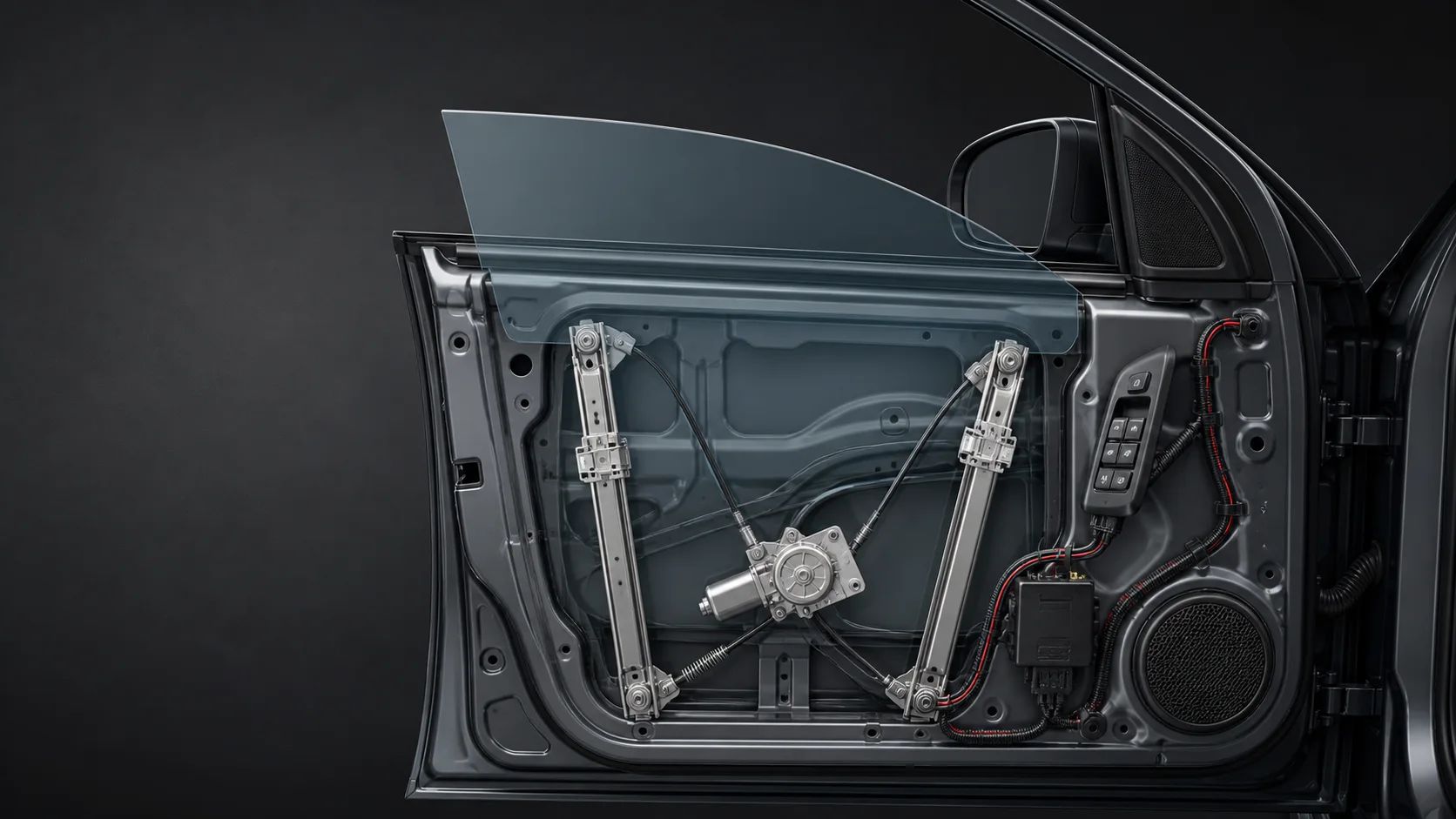
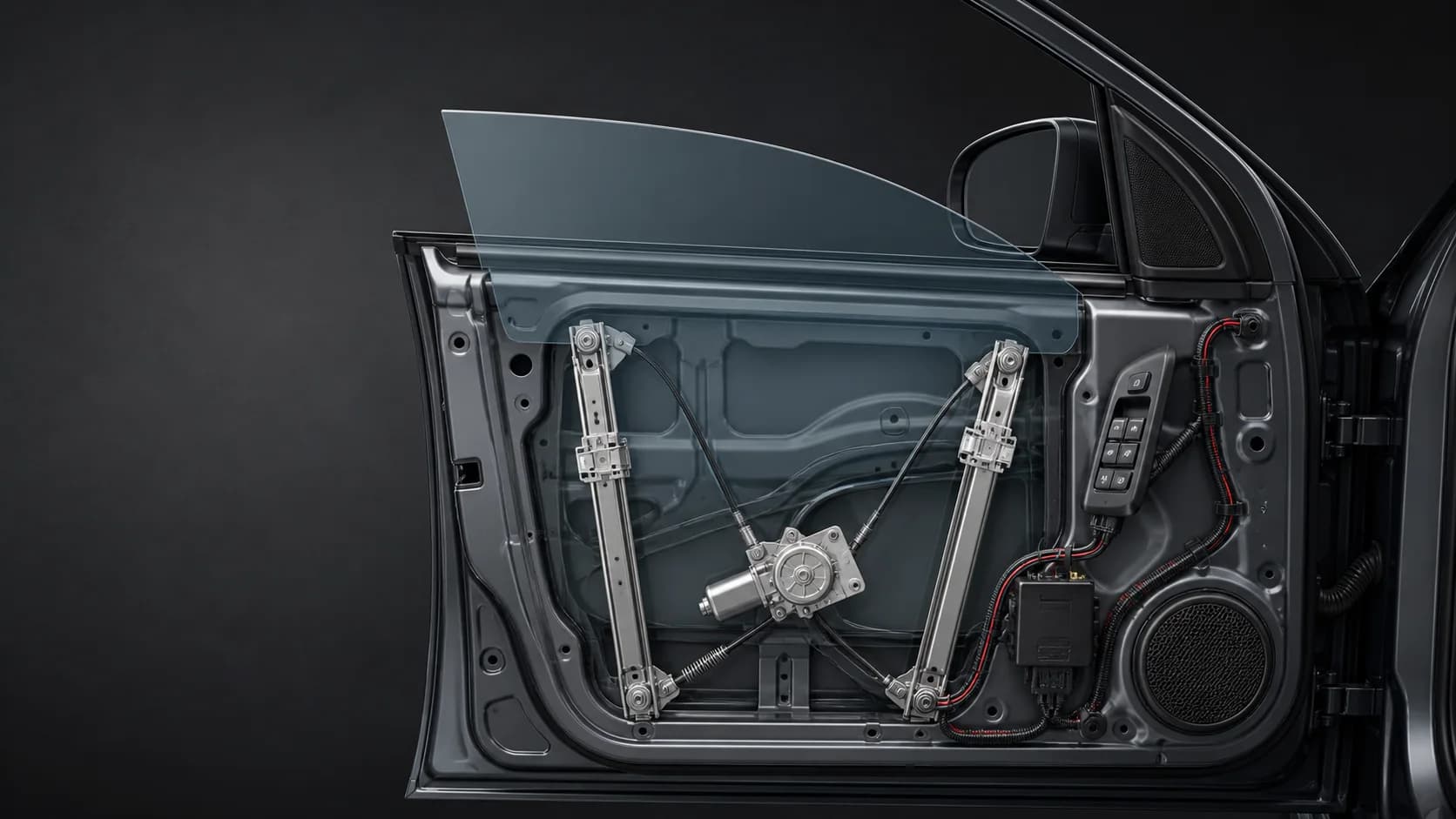
The regulator holds and guides the glass. If the pane falls into the door, leans, or travels crooked, inspect the regulator, carrier, rail, run channel, and glass attachment before blaming the motor. A GM bulletin for certain vehicles shows that glass alignment can change with regulator-rail position and the run channel. That is a vehicle-specific example, not a universal adjustment procedure.
Noise or binding still needs mechanical inspection
A hum or movement inside the door means the system is trying to act. It does not identify the failed part. The regulator, run channel, glass attachment, and motor still need vehicle-specific inspection. A current Subaru bulletin, for example, uses a measured regulator check for the listed Legacy and Outback models. Its Ascent procedure instead replaces the run-channel seal without regulator inspection or replacement. Those procedures apply only to the vehicles named in the bulletin, not every power window.
A silent window leaves several electrical suspects
A silent window does not prove the motor is bad. Check the window lockout, fuse, switch command, wiring, connector, control module, power, and ground for that vehicle. In a GM diagnostic bulletin for specific Buick Envista and Chevrolet Trax models, a window that worked through the scan tool but not the switch led to the switch. When the motor stayed inoperative, the bulletin required correct operating voltage and ground before motor replacement.
Repeated switch presses can hide the original fault
Do not keep pressing the switch to make a stuck window move. The GM bulletin notes that motor overload protection can stop operation temporarily after repeated cycling. A pause that makes the window work again does not identify the failed part. It only means the diagnosis should be made while the fault and circuit can be tested.
Broken glass is a different first decision
If the pane is cracked, shattered, or missing, start with side-glass replacement and inspect the mechanism for impact damage or loose fragments. Our broken side window or failed regulator guide separates visible glass damage from an intact window that will not travel normally.
VA Auto Glass diagnoses power windows at the McLean shop
Send the vehicle year, make, and model, which window is affected, a photo, and a short description of the sound or movement. Regulator, motor, switch, wiring, and track work is diagnosed at our McLean shop because the door panel and mechanism need to come apart. We test before ordering the repair part.
Questions about power-window diagnosis
- Does no sound mean the window motor is bad?
- No. The motor is one possibility, but the fuse, switch, wiring, connector, ground, module, or lockout can also stop the window without a sound. Test the circuit before replacing the motor.
- Does grinding mean the regulator is bad?
- It makes a mechanical fault more likely, but it does not identify one part by itself. The regulator, track, guides, glass attachment, or motor gearing may need inspection. Stop cycling the switch while the glass is binding.
- Why does the window work from one switch but not the other?
- That makes the failed switch or its control circuit a stronger suspect. The vehicle's wiring and module design still control the exact test, so the working switch is a clue rather than final proof.
- Can VA Auto Glass diagnose this at my house?
- No. Power-window mechanism and electrical diagnosis happens at our McLean shop because the door panel must come off and the circuit and moving parts need to be tested safely.
Find the failed part before you buy one
Send the vehicle details, a photo, and what the window does. We'll route it to power-window diagnosis at our McLean shop.