
Guide
Windshield leak: glass bond, drain, or body seam?
Updated August 28, 2026
Short answer
Water on an A-pillar, dash, headliner, or front carpet does not prove the windshield bond is leaking. Vehicle-specific service bulletins document similar cabin water from gaps in windshield urethane, sunroof drain hoses, cowl seams, and body seams. The right first step is a controlled water test that isolates the entry area before any glass is removed or resealed.
Why the wet spot does not identify the failed part
Front-cabin water can enter through more than one path before it appears on the same trim or carpet. OEM service bulletins direct technicians to check the glass bond, drains, cowl area, and sealed body joints on specific vehicles. The place that is wet narrows the test area. It does not identify the repair by itself.
When the glass-to-body bond is the source
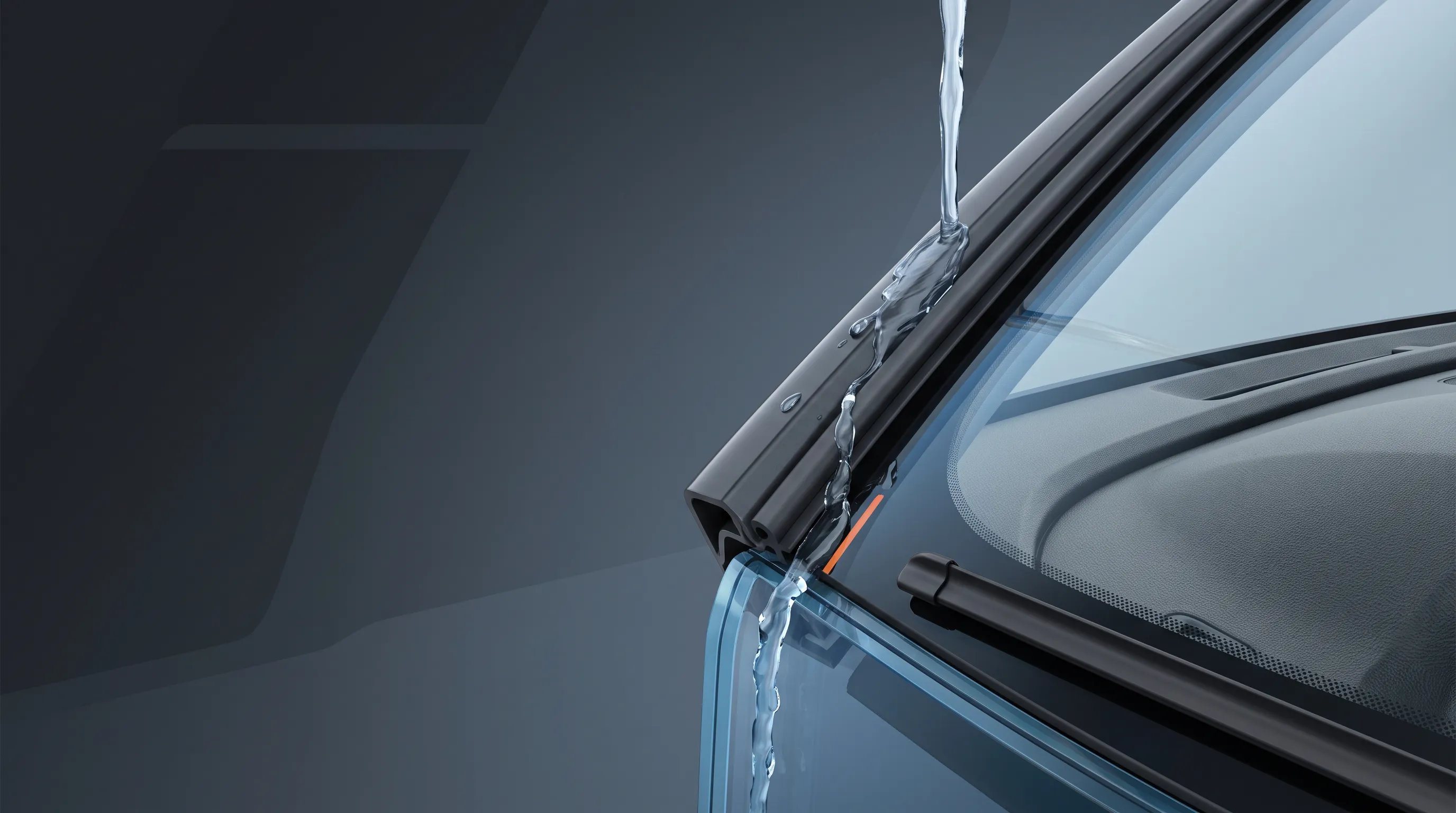
The windshield is sealed to the body with urethane. A gap in that bond can admit water where the glass meets the opening. Hyundai documented this condition on specific vehicles with an incomplete windshield sealant path. A leak that starts after glass work makes the bond line an important place to test, but timing alone is not proof.
When a sunroof drain or cowl path looks like a windshield leak
Sunroof drain hoses can run near the A-pillars, and cowl water paths sit below the windshield. A disconnected or blocked drain, or a cowl seam leak, can put water near the windshield without a failed windshield bond. If the vehicle has a sunroof, the drain system belongs in the diagnosis.
When the body seam changes the repair
A sealed body joint can also admit water near the upper windshield or cowl. GM has published vehicle-specific procedures for pinhole voids and missing or misapplied seam sealer in these areas. If testing isolates a body seam instead of the glass bond, sealing the windshield would not fix the source.
What a controlled water test should do
The test should reproduce rain without forcing water past a sound seal. One current OEM procedure uses a low-pressure shower pattern and watches the suspected area from inside. That procedure says not to use a pressure washer or an open garden hose. The exact preparation and inspection points still depend on the vehicle.
How the source decides the next step
A confirmed windshield-bond leak can call for removal and proper resealing. A drain problem follows the sunroof or body-drain path. A cowl or body-seam leak may need a different repair. We test first, show you what the test isolates, and tell you whether the windshield service is the right route before work begins.
Why the examples do not replace vehicle-specific diagnosis
The cited bulletins apply to specific makes, models, and conditions. They are evidence that similar symptoms can have different sources. They do not replace the current procedure or diagnosis for your vehicle.
Questions about this guide
- Does water on the A-pillar mean the windshield seal failed?
- No. The windshield bond is one possible source, but a sunroof drain, cowl path, or body seam can wet the same area. A controlled test has to isolate the entry point.
- Can a sunroof leak look like a windshield leak?
- Yes. Front sunroof drains can route near the A-pillars. A disconnected or blocked drain can put water beside the windshield even when the windshield bond is sound.
- Does a leaking windshield always need replacement?
- No. The source and condition of the glass, bond, and opening decide the repair. A glass-bond leak, drain problem, body seam, rusted opening, or edge-damaged windshield can require different work.
- What should I send for a leak diagnosis?
- Send the year, make, model, service ZIP, whether the vehicle has a sunroof, whether the windshield was replaced before the leak started, and photos or video of where water appears.
Find the leak before choosing the repair
Send the vehicle details, sunroof history, prior glass work, service ZIP, and photos or video of where the water appears.